2026 Top Trends in Material Handling Automation for Efficient Operations
As we approach 2026, the landscape of material handling automation is set to transform dramatically. Experts in the field, such as Dr. Laura Smith, a leading authority on logistics technology, emphasize the importance of this shift. She states, "Automation in material handling is no longer an option; it’s a necessity for efficiency."
This statement reflects the urgency companies face today. Operations must evolve to meet increasing demand and complexity. Material handling automation not only streamlines processes but also reduces human error. It introduces advanced technologies like AI and robotics, which can enhance productivity.
Yet, not all implementations are seamless. Companies often struggle with integration challenges and employee training. The need for a comprehensive strategy becomes apparent. As the industry shifts, understanding these trends is vital for sustained success. Adapting to material handling automation requires both vision and diligence. The road ahead is filled with opportunities and obstacles alike.
2026 Trends in Robotics and Automation for Material Handling Systems
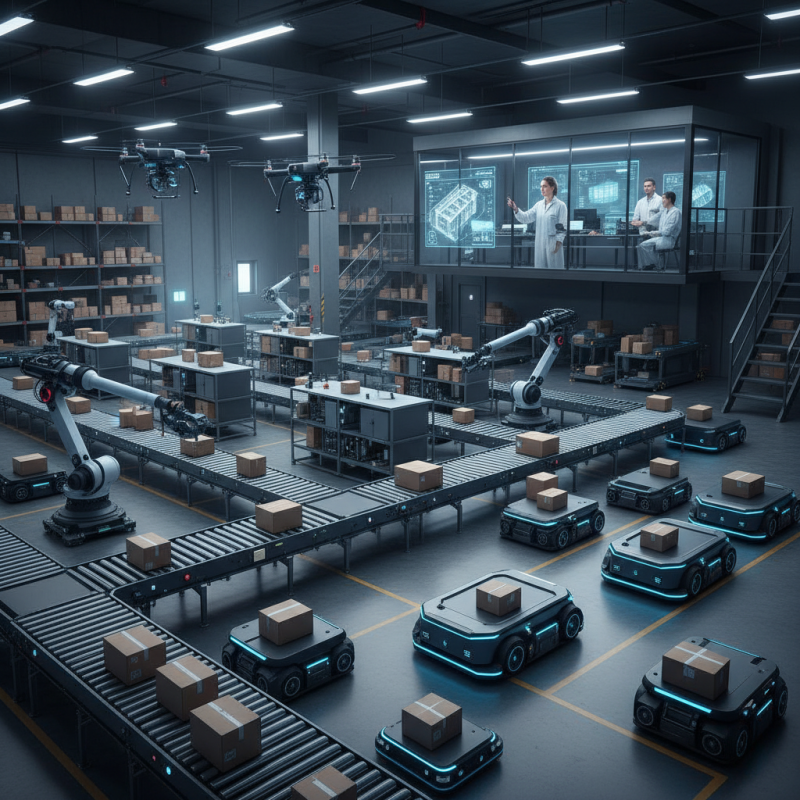
The landscape of material handling systems is evolving rapidly.
Robotics and automation play pivotal roles in enhancing efficiency. Innovations in these areas are set to redefine
how warehouses and distribution centers operate in 2026.
Advanced robotics, equipped with artificial intelligence, can analyze complex environments.
This capability allows for adaptive operation, reducing the need for manual intervention in routine tasks.
Automation in material handling also faces challenges. Integration with existing systems can be complex.
Not all facilities are ready for such transitions. Organizations must consider workforce training
to keep pace with technology. The human element remains vital, even as machines take over mundane tasks.
Ensuring safety and job satisfaction for workers during this transition is essential.
Moreover, data analytics is becoming crucial in optimizing operations.
Real-time insights can help in decision-making. However, reliance on data systems raises concerns about
cybersecurity. Companies must invest in robust security measures to
protect sensitive information. This evolving landscape requires continuous adaptation and learning for all
stakeholders involved.
Impact of AI and Machine Learning on Operational Efficiency in Warehousing
The integration of AI and machine learning in warehousing has transformed how businesses operate. Automation tools leverage vast amounts of data to enhance decision-making processes. These technologies optimize inventory management, forecasting, and order fulfillment. For instance, predictive analytics can identify patterns in demand, leading to better stock levels.
Despite these advancements, challenges remain. Companies struggle with implementing AI solutions due to high initial costs. Training staff to work with new technologies can also be a hurdle. Moreover, reliance on automation might lead to an overemphasis on efficiency at the expense of the human touch in customer service.
Innovations in AI are making operations more efficient. Automated guided vehicles (AGVs) and robots are revolutionizing material handling. They reduce the risk of human error and minimize labor costs. However, businesses must remain vigilant. Balancing technology and human insights is crucial for sustained success. The journey to full automation is complex and requires continuous evaluation.
2026 Top Trends in Material Handling Automation
This chart illustrates the impact of AI and Machine Learning on operational efficiency in warehousing, showcasing how various technologies contribute to improved productivity metrics over time.
The Rise of Autonomous Mobile Robots (AMRs) in Material Handling
The introduction of Autonomous Mobile Robots (AMRs) into material handling is revolutionizing operations. AMRs improve efficiency by automating tasks such as transporting goods and managing inventory. These robots navigate environments using advanced sensors and maps, ensuring safety and reducing the risk of accidents.
Tips: When implementing AMRs, plan proper routes and identify high-traffic areas. Regular maintenance is also essential for optimal performance. Operators must be trained to manage these systems effectively, ensuring both human and robot workers can coexist.
These robots are not flawless. They can struggle in complex environments or with unexpected obstacles. Businesses should continuously monitor their performance and adapt strategies as needed. Flexibility in operations is crucial for maximizing AMR effectiveness. This approach allows companies to stay responsive and maintain smooth workflows in dynamic settings.
Integrating IoT Solutions for Enhanced Supply Chain Visibility in 2026
The integration of IoT solutions is reshaping material handling automation. In 2026, companies must focus on enhancing supply chain visibility. Real-time data collection from IoT devices enables more informed decisions. This shift allows better tracking of inventory and equipment. With sensors and smart devices, automation becomes more efficient.
Tips: Ensure you evaluate your existing systems. Identify weaknesses in your current supply chain visibility. Consider incremental upgrades. Sometimes, small improvements can make a significant impact.
Visibility isn't just about technology. It’s about data interpretation. Companies must develop strategies to act on insights. Poor data can lead to costly mistakes. Implement training programs for your staff. Empower them to use data effectively.
Another consideration is system integration. Not all IoT devices communicate seamlessly. Gaps in data can hinder effectiveness. Regularly assess your technology stack. Maintaining compatibility ensures smoother operations. Adapting to new challenges requires flexibility and openness.
2026 Top Trends in Material Handling Automation for Efficient Operations - Integrating IoT Solutions for Enhanced Supply Chain Visibility in 2026
| Trend |
Description |
Expected Impact |
Implementation Year |
| Autonomous Mobile Robots (AMRs) |
Increasing use of AMRs for material transport within warehouses. |
Increased efficiency in warehouse operations by 30%. |
2026 |
| IoT Integration |
Using IoT sensors to monitor equipment and inventory in real-time. |
Enhanced supply chain visibility and decision-making. |
2026 |
| Artificial Intelligence (AI) in Planning |
Leveraging AI algorithms for demand forecasting and resource allocation. |
Reduction in inventory costs by up to 25%. |
2026 |
| Collaborative Robots (Cobots) |
Integration of cobots to assist human workers in lifting and sorting. |
Increased productivity and worker safety. |
2026 |
| Blockchain for Supply Transparency |
Implementing blockchain to trace product origin and ensure compliance. |
Enhanced trust with customers and reduced fraud. |
2026 |
Sustainability Initiatives in Material Handling Automation: A 2026 Overview
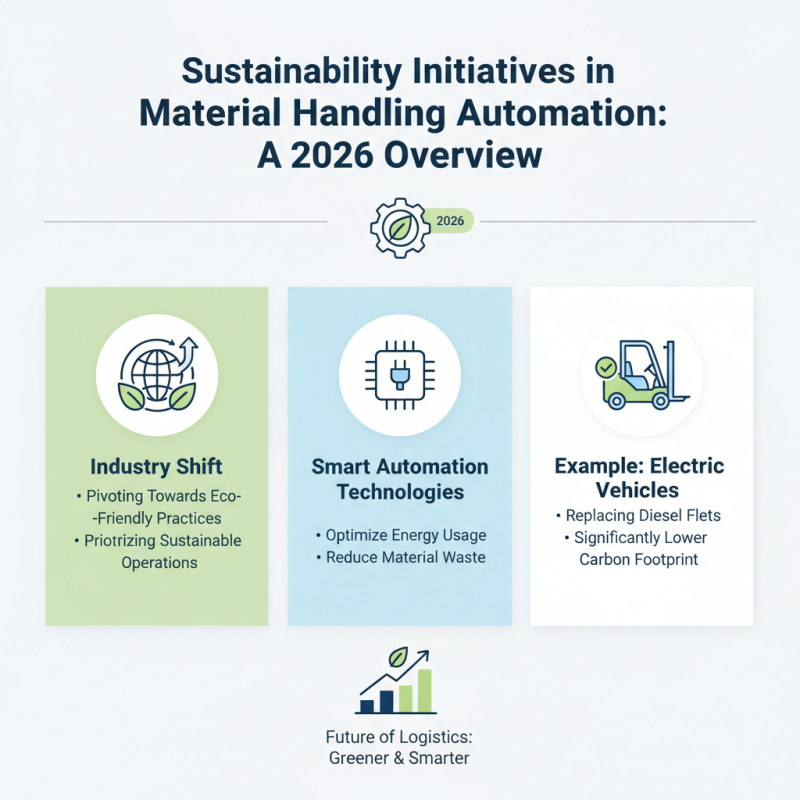
As industries pivot towards sustainability, material handling automation is evolving. Companies are increasingly prioritizing eco-friendly practices. This shift affects how they design and operate their systems. Smart automation technologies can optimize energy usage, reducing waste. For instance, using electric vehicles instead of diesel can significantly lower carbon footprints.
Data analytics also plays a crucial role in sustainability. By monitoring energy consumption in real-time, businesses can identify inefficiencies. This proactive approach allows for adjustments. However, many companies struggle to fully implement these technologies. The initial investment can seem daunting. Yet, the long-term benefits often outweigh the costs.
Additionally, companies must consider the recycling of materials in their automation processes. This is an area that often lacks focus. Recycling not only minimizes waste but also conserves resources. There’s still a need for improvement in this field. More research is necessary to innovate closed-loop systems. Balancing efficiency and sustainability remains a complex challenge for many operations.