What is Automation Equipment and How Does It Work?
Automation equipment plays a vital role in today’s industrial landscape. Experts in the field highlight its importance. John Smith, a leading automation consultant, once stated, "Automation equipment transforms the way industries operate." This quote encapsulates the essence of automation's impact on productivity and efficiency.
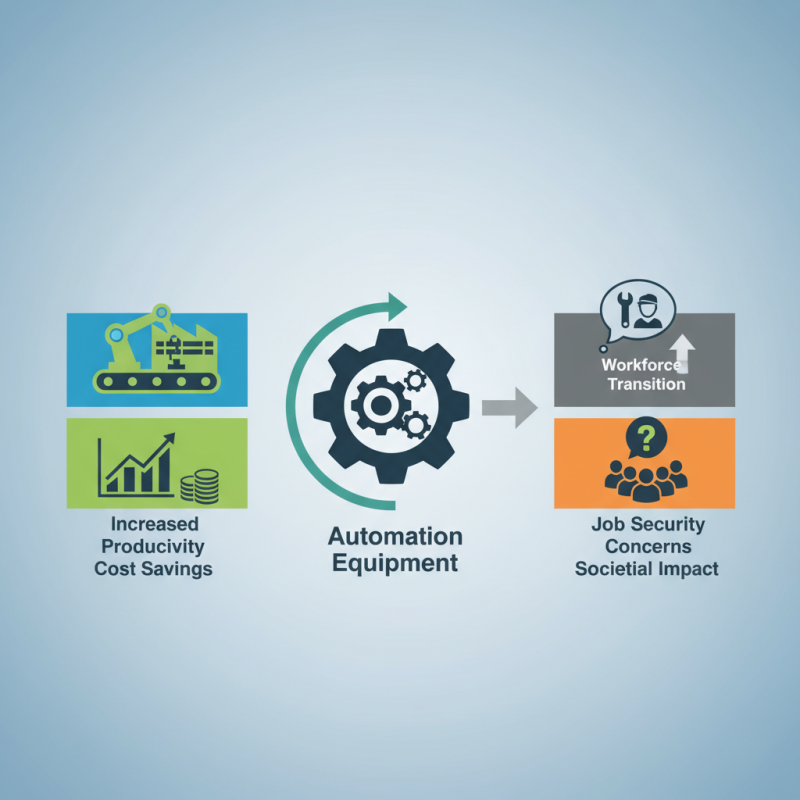
Machines and systems designed to automate tasks are continually evolving. They range from simple conveyor belts to complex robotic systems. These devices streamline processes, reduce human error, and often lead to cost savings. However, the integration of automation equipment is not without challenges.
Companies must consider various factors, such as workforce transitions and training requirements. Automation can create uncertainty in job security for many workers. Thus, while automation equipment holds promise, it also necessitates careful thought about its broader effects on society and employment.
Definition of Automation Equipment and Its Purpose
Automation equipment refers to tools and machines designed to perform tasks with minimal human intervention. The primary purpose of this technology is to enhance efficiency and accuracy. These devices can range from simple conveyor belts to complex robotic systems. Each piece plays a vital role in manufacturing and other industries.
In practice, automation equipment streamlines operations. It reduces the risk of human error, which is crucial in high-stakes environments like pharmaceuticals. However, technology is not without flaws. Some automated systems might malfunction, leading to unexpected downtime. Maintenance is essential, yet it can be overlooked in fast-paced environments.
Moreover, there’s a human factor to consider. Workers might feel disconnected from processes. This can lead to resistance against automation. Striking a balance between machines and human input is crucial for successful implementation. Embracing innovation should not overshadow the importance of skilled labor. The goal should always be to enhance productivity, not replace the workforce entirely.
Types of Automation Equipment Used in Various Industries
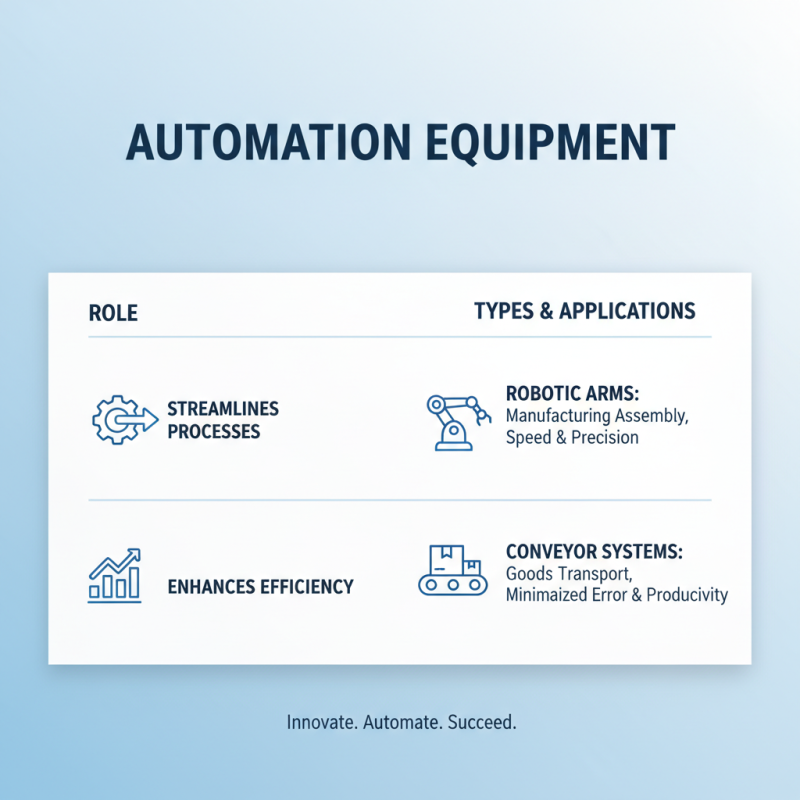
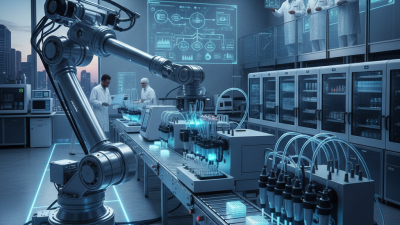
Automation equipment plays a crucial role in various industries. It streamlines processes and enhances efficiency. Different types exist, each serving specific purposes. In manufacturing, robotic arms handle assembly tasks. They increase speed and precision. Conveyor systems transport goods seamlessly. This minimizes human error and boosts productivity.
In the food and beverage sector, automation equipment ensures consistency. Machines fill bottles or packages quickly. Quality control systems monitor freshness and safety. However, over-reliance on these systems may lead to challenges. Technical failures can disrupt production. It is essential to maintain equipment regularly.
For industries like logistics, automated guided vehicles (AGVs) are prevalent. They move materials around warehouses. This reduces manual labor but requires careful programming. Workers must still oversee operations to prevent mishaps. Training staff on new technologies is vital for success.
Tips: Always evaluate the impact of automation on workforce dynamics. Consider the balance between technology and human touch. Regularly assess whether the equipment meets evolving demands.
Components and Technology Behind Automation Equipment
Automation equipment encompasses various technologies that enhance operational efficiency in multiple sectors. Key components include sensors, actuators, and control systems. According to a report by McKinsey, automating tasks can boost productivity by up to 30%. While this offers notable advantages, the integration process can be complex and require significant adjustments.
Sensors play a pivotal role in automation. They collect data essential for real-time decision-making. The data enables industries to optimize processes, save time, and reduce errors. However, the reliance on sensors can lead to potential blind spots if they fail or provide inaccurate readings.
Actuators then take commands from control systems and carry out movement or adjustments. The reliability of actuators is crucial, as failures may result in costly downtimes.
Furthermore, control systems are the brains of automation equipment. These systems analyze data and execute commands. A survey by Statista indicated that 60% of companies cited ease of use as a major challenge in implementation. Many organizations struggle with software incompatibility and workforce adaptation.
This highlights the need for continuous training and assessment in new technologies. The path to seamless automation is filled with hurdles, requiring both careful planning and ongoing reflection.
How Automation Equipment Operates and Facilitates Processes
Automation equipment plays a crucial role in modern industries. It improves efficiency and consistency in various processes. Many tasks, like assembly and packaging, can be done faster. These machines take over repetitive jobs, reducing human error. They use sensors and software to monitor operations.
How does automation equipment work? Often, it relies on programmable logic controllers (PLCs) to control machinery. Sensors detect conditions like temperature and pressure. Data collected informs decision-making. Robots, conveyors, and automated guided vehicles (AGVs) are common examples. They streamline workflows and enhance safety. However, reliance on machines can lead to skills gaps. Workers must adapt and learn new roles.
Challenges remain as technology evolves. Integrating equipment into existing systems is complex. Maintenance and troubleshooting require constant attention. Organizations must balance automation with human touch. Despite the benefits, the transition isn't always smooth. Continuous improvement and training are essential for long-term success.
Benefits and Challenges of Implementing Automation Equipment
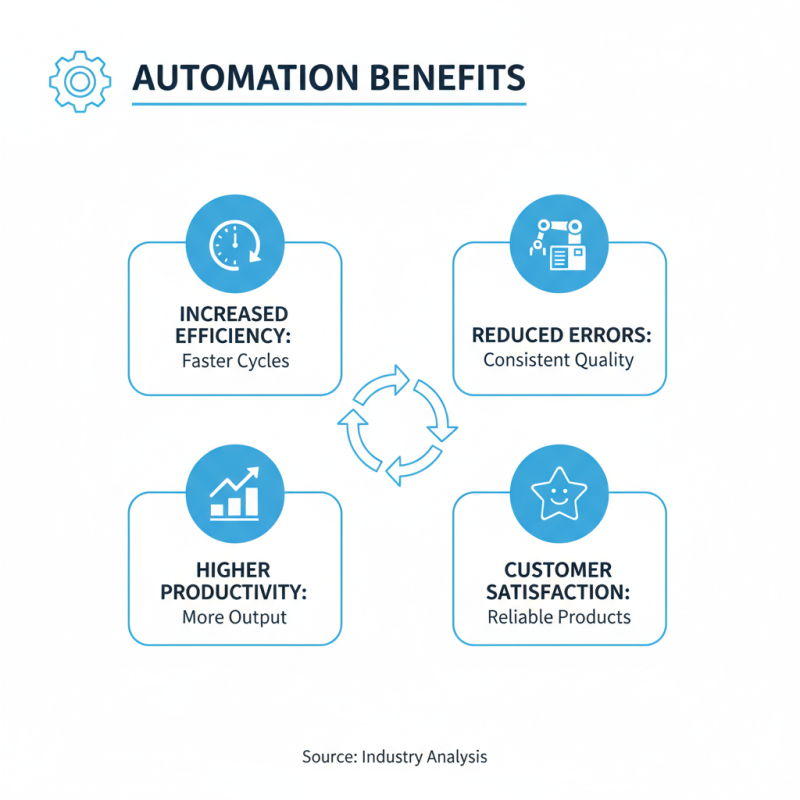
Implementing automation equipment can bring significant benefits. It increases efficiency in production processes. Tasks that once took hours can be completed in minutes. For example, robotic arms in assembly lines can work tirelessly. They reduce errors caused by human fatigue. This reliability often leads to enhanced product quality. Companies may see an uptick in customer satisfaction as a result.
However, the transition to automation is not without challenges. Initial costs can be high, which may deter some businesses. Training employees to work alongside new technology is essential. There's often resistance to change from team members. Workers may fear job loss, leading to lower morale. Without proper communication, this can create a divide in the workplace. Additionally, maintenance of automated systems can be complex and time-consuming. Companies must weigh these factors carefully before making the shift.